

How Can People And Animals Relate To Each Other
Y ou are an animal, but a very special ane. By and large baldheaded, you're an ape, descended from apes; your features and deportment are carved or winnowed by natural choice. But what a special simian you are. Shakespeare crystallised this thought a good 250 years before Charles Darwin positioned united states as a creature at the end of the slightest of twigs on a single, bewildering family unit tree that encompasses 4bn years, a lot of twists and turns, and 1 billion species.
"What a piece of work is a human!" marvels Hamlet. "How noble in reason! How infinite in faculty! … In action how similar an angel! / In apprehension how like a god! … The paragon of animals!" Village then ponders the paradox at the center of humankind: what is this quintessence of dust? We are special, simply we are as well merely thing. We are animals, yet we behave similar gods. Darwin riffed on Hamlet in 1871 in his second masterpiece, The Descent of Man, declaring that we have "god-like intellect", yet nosotros cannot deny that homo – and adult female – carries the "indelible stamp of his lowly origin". This is the central question in understanding our identify in the scheme of development.
What makes u.s. special, while we remain rooted in nature? We evolved from earlier creatures, each on a unique trajectory through time. Nosotros share Deoxyribonucleic acid with all the organisms that accept ever existed; the proteins our genes encrypt apply a lawmaking that is indistinguishable from that in an amoeba or a zebu.
How did nosotros get the beings that we are today? Scientists call this state "behavioural modernity", or sometimes "the full package", meaning all the things that we consider as part of the human condition: speech communication, linguistic communication, consciousness, tool use, fine art, music, material culture, commerce, agriculture, non‑reproductive sex and more. Precisely when these facets of our lives today arose in our species is debated. Only we practise know that within the concluding 40,000 years, they were all in place, all over the earth. Which facet singles united states out, among other animals – which is distinctively man?
Navigating this territory can be treacherous, and riven with contradictions. Nosotros know we are animals, evolved via the same mechanisms every bit all life. This is comprehensively displayed in the limitless evidence of shared evolutionary histories – the fact that all living things are encoded by DNA. Or that like genes have similar functions in distantly related creatures (the cistron that defines an centre is almost the aforementioned in all organisms that accept any form of vision). Or that our bodies harbour the indelible stamps of common descent in our basic (our hands incorporate bones almost perfectly like-for-similar with the bones in the apartment paddle of a dolphin's fin, and with a horse's front legs, and a bat'southward wings).
Prudent scepticism is required when we compare ourselves with other beasts. Evolution accounts for all life but not all traits are adaptations. Nosotros use animals in science every twenty-four hour period to attempt to sympathize complex biochemical pathways in order that nosotros might develop drugs or sympathise disease. Mice, rats, monkeys, fifty-fifty cats, newts and armadillos, provide invaluable insights into our own biochemistry, only even and then, all researchers acknowledge the limitations of those molecular analogies; nosotros shared ancestors with those beasts millions of years agone, and our evolutionary trajectories have nudged that biochemistry to conform each species equally information technology is today.
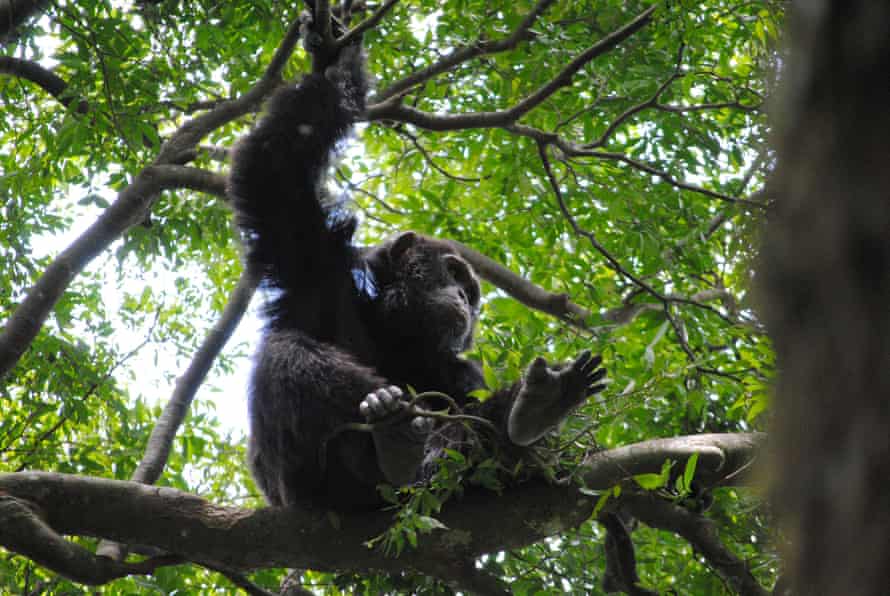
When it comes to behaviour, though, the parallels frequently get distant, or examples of convergent evolution. The fact that a chimpanzee uses a stick to winkle out a fat chow from the bark of a tree is a trick independent of the aforementioned ability in Caledonian crows, whose skills are frequently the source of increasing wonder as we study them more. Humans are obligate tool users; we've extended our attain far beyond our grasp by utilising nature and inventing technology. Only many other creatures apply tools, effectually 1% of all animals, and these bridge nine classes – body of water urchins, insects, spiders, crabs, snails, octopuses, fish, birds and mammals. What this inevitably means is that using tools is a trick that has been acquired many times in evolution, and it is virtually impossible to presume a single evolutionary ancestor from which this behaviour sprang. Orangutans apply leaves and branches equally gloves when handling spiny fruit and equally hats when it'due south raining, and they fashion twigs to assistance masturbation. Chimps sharpen sticks with their teeth with which to kebab sleeping bush babies. Boxer crabs bear pairs of stinging anemones to ward off enemies, which earns them the less hardcore nickname of "pom-pom crabs". There is no bear witness that these similar behaviours show continuity through fourth dimension.
Arguments effectually these bug are generally the preserve of scientists. Merely there is a set of behaviours that are also inspected forensically and with evolution in mind whose achieve extends far across the academy. Nosotros are a species that devotes enormous resource, try and time to touching each other'south genitals. Most animals are sexual beings and the principal function of sexual activity is to reproduce. The statistician David Spiegelhalter estimates that up to 900,000,000 acts of human heterosexual intercourse take place per year in United kingdom of great britain and northern ireland alone – roughly 100,000 per hour. Around 770,000 babies are born in Britain each year, and if we include miscarriages and abortions, the number of conceptions rises to about 900,000 per year.
What that means is that of those 900,000,000 British encounters, 0.1% result in a fertilised egg. Out of every 1,000 sexual acts that could result in a baby, only one actually does. In statistics, this is classed as not very meaning. If we include homosexual behaviour, and sexual behaviour that cannot effect in a pregnancy, including alone acts, and then the book of sex that nosotros enjoy magnificently dwarfs its primary purpose.
Is Homo sapiens the only species that has decoupled sex from reproduction? Enjoying sexual activity might seem similar a uniquely man feel, yet while we are reluctant to consider pleasure in other animals, we are certainly not the only animals that engage in non-reproductive sexual activity. Zoo behaviour is oft weird, as animals in captivity are far from their natural environment, but there are two male bears in Zagreb zoo who enjoy a daily act of fellatio, while simultaneously humming. Some goats perform car‑fellatio (which, according to the famous Kinsey Written report on sexual behaviours, two.7% of men have successfully attempted). Males of some lxxx species, and females of around 50 species of primates are frequent masturbators. Some behaviours reflect deviant or criminal sexual behaviours, such every bit sea otters who drown females and and then go along their bodies to copulate with. The award for sheer ingenuity goes to the dolphins: there is one reported example of a male masturbating by wrapping an electric eel around his penis.
Some – not all – of these seemingly familiar sexual practices can exist explained readily. Male Cape ground squirrels are promiscuous, and masturbate afterwards copulation, we think, for hygiene reasons, protecting themselves from sexually transmitted diseases by flushing their tubes. Other behaviour is nonetheless mysterious to united states: giraffes spend nigh of their time sexually segregated, and the vast majority of sexual relations appear to be male-to-male penetration. As with the myriad examples of sexual behaviour between members of the same sex, it demonstrates that homosexuality – in one case, and in many places to this mean solar day, decried as a crime against nature – is widespread.
Considering sexual activity and gender politics are so prominent in our lives, some wait to development for answers to hard questions well-nigh the dynamics between men and women, and the social structures that cause us so much ire. Evolutionary psychologists strain to explain our behaviour today by speculating that it relates to an accommodation to Pleistocene life. Frequently these claims are absurd, such as "women wear blusher on their cheeks because it attracts men by reminding them of ripe fruit".
Purveyors of this kind of pseudoscience are plenty, and most prominent of the contemporary agglomeration is the clinical psychologist and guru Hashemite kingdom of jordan Peterson, who in lectures asserts this "fact" about blusher and fruit with absolute certainty. Briefly, issues with that idea are pretty straightforward: near fruit is not cherry; most skin tones are non white; and crucially, the test for evolutionary success is increased reproductive success. Do nosotros have the slightest bleep of data that suggests that women who clothing blusher have more children than those who don't? No, we exercise not.
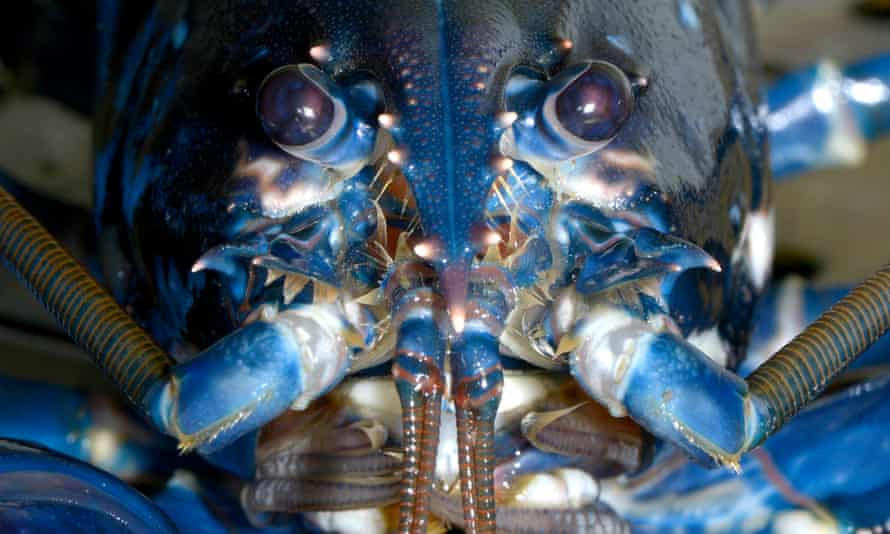
Peterson is besides well known for using the being of patriarchal dominance hierarchies in a non-specific lobster species as supporting evidence for the natural being of male hierarchies in humans. Why out of all creation choose the lobster? Considering it fits with Peterson's preconceived political narrative. Unfortunately, it's a crazily poor choice, and woefully researched. Peterson asserts that, equally with humans, lobsters have nervous systems that "run on serotonin" – a phrase that carries nigh no scientific pregnant – and that as a outcome "it'south inevitable that there will be continuity in the way that animals and man beings organise their structures". Lobsters exercise have serotonin-based reward systems in their nervous systems that in some way correlate with social hierarchies: college levels of serotonin relate to increased assailment in males, which is part of establishing mate selection when, equally Peterson says, "the nigh desirable females line up and vie for your attention".
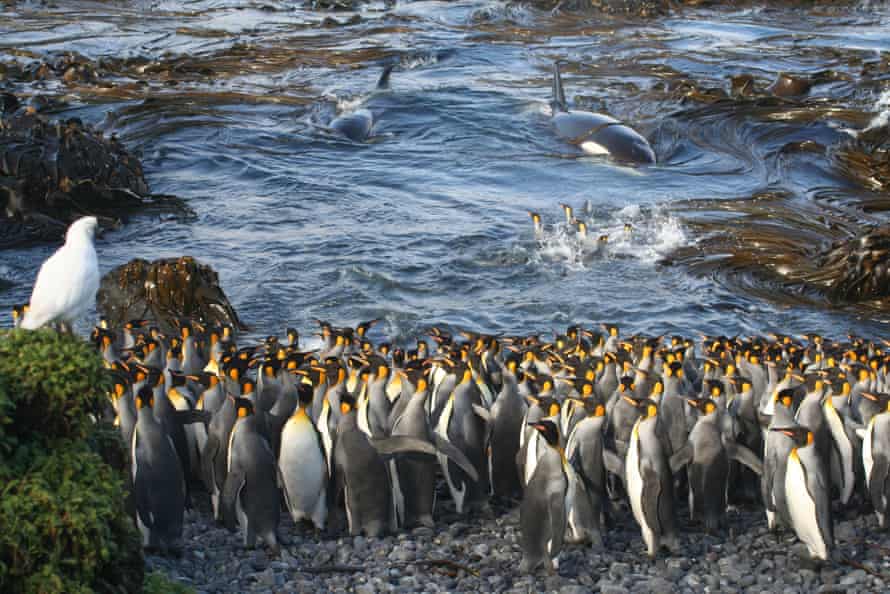
Sexual choice is one of the driving forces of natural selection in most animals. In general, males compete with each other, and females subsequently have choice over which males they mate with. While this is one of the most studied areas of evolutionary biological science, information technology's incredibly hard to found that rules that apply to lobsters (or does and stags, or peacocks and peahens) too apply to humans. There are physical and behavioural differences between men and women in relation to sex, but our cultural evolution has loosened the shackles of natural pick to the extent that we cannot satisfactorily friction match our behaviour with other beasts, and claims that we tin are often poor science.
Peterson believes that the organisation that is used by lobsters is why social hierarchies exist in humans. The problem with the assertion is this: serotonin is indeed a major part of the neural transmitter network in humans, but the effect of serotonin in relation to assailment is the opposite. Lower levels increase aggression, because it restricts communication between the frontal cortex and amygdala. Lobsters don't have an amygdala or frontal lobes. Or brains for that matter. Most serotonin in humans is produced to assistance digestion. And lobsters also urinate out of their faces. Trying to establish evolutionary precedents that justify or explain abroad our own behaviour is scientific folly.
If you wanted to brand a unlike but every bit specious political argument with a waft of science about how to arrange our society, y'all could compare us to killer whales. They live in a matriarchal social group, in some cases led by post-menopausal females. Or hyenas, the animate being with the greatest jaw force of any, which are also matriarchal, and engage in clitoral licking, to bond socially and to establish hierarchy. Or the insect society hymenoptera, which includes ants, bees and wasps, and are roughly the aforementioned evolutionary distance from us as lobsters. Their social hierarchy involves a single queen and males, whose part is twofold: protecting the colony, and providing sperm on demand – they are literally sex slaves. Or the freshwater small-scale invertebrates called bdelloid rotifers: millions of years ago they abased males birthday, and seem to be doing but fine.
Yes, hierarchies assuredly exist in animals as contest is an inherent part of nature, and our sexual biology has mutual roots with all life on Earth. But we should not presume that understanding the biological science of other animals volition necessarily illuminate our own, every bit Peterson does. It's a foreign irony that someone who claims to bow to evolution should simultaneously fail to grasp its concepts. In some ways it's a less cogent argument to an evolutionary biologist than that of creationists, who merely deny that evolution has happened. So again, it was Darwin who said that "ignorance more oftentimes begets confidence than does noesis". Nowadays, you can buy "lobster dominance" T-shirts.
We crave stories, and for those tales to deliver narrative satisfaction. Nosotros want dramatic triggers that bestow the states with behaviours that are ours alone and therefore might be used to define humankind, and in doing then give us a sense of belonging or even purpose in the confusing modern globe. Nosotros look to science and history to fulfil those cravings. But life is complex, culture is dynamic: evolution doesn't work that way. Sometimes we talk about cultural evolution in opposition to biological development, the quondam being passed on socially, the latter being encoded in our Deoxyribonucleic acid. But the truth is that they are intrinsically linked, and a amend way to think near it is as gene-culture co-development. Each drives the other, and cultural transmission of ideas and skills requires a biologically encoded ability to practise then. Biology enables culture, civilization changes biological science. What humans uniquely do is that we accumulate culture, and build on it. Many animals learn, but only we teach.
As we meandered into the most contempo 100,000 years or so, our civilisation became ever more than significant in crafting our abilities. This is apparent in the fact that our bodies have not significantly changed in that fourth dimension. A adult female or man from 1,000 centuries ago would fit in perfectly well in whatever city in the world today if nosotros tidied them up and gave them a haircut. Simply the way we live our lives since so has become ever more complex.
We are desperate to find the things that tip us over the edge from beingness only an fauna into Village'southward paragon of animals. Was it our language? Was it religion, or music, or art, or any number of things that are not as unique to united states as we had once thought? The truth is that it was all of these things and more than, but crucially, it was in the engagement of our minds to transmit skills and ideas to others. We inverse our societies and maximised how culture is transmitted. We took evolution'south work, and by education each other, we created ourselves. The stories we tell about how we came to be who we are often neglect the complexity of biology and the oceans of time during which we evolved. To empathize homo development, we demand new stories.
Source: https://www.theguardian.com/books/2018/sep/21/human-instinct-why-we-are-unique
Posted by: campbellthrecties61.blogspot.com
0 Response to "How Can People And Animals Relate To Each Other"
Post a Comment